On this page 11 sections
- What are life skills for adults with disability?
- What are some examples of everyday life skills?
- How are daily living skills different from daily living support?
- Does the NDIS fund life skills training for adults?
- Which part of an NDIS plan pays for life skills?
- What does capacity building for daily activities mean in the NDIS?
- How do you set NDIS life skills goals?
- What does a life skills session look like?
- How much does life skills training cost?
- FAQs about life skills for adults with disability
- Ready to build new skills?
A cup of tea, made your way. A bus card tapped on the reader. A letter opened, read and dealt with. Small jobs, but each one is a step towards running your own life.
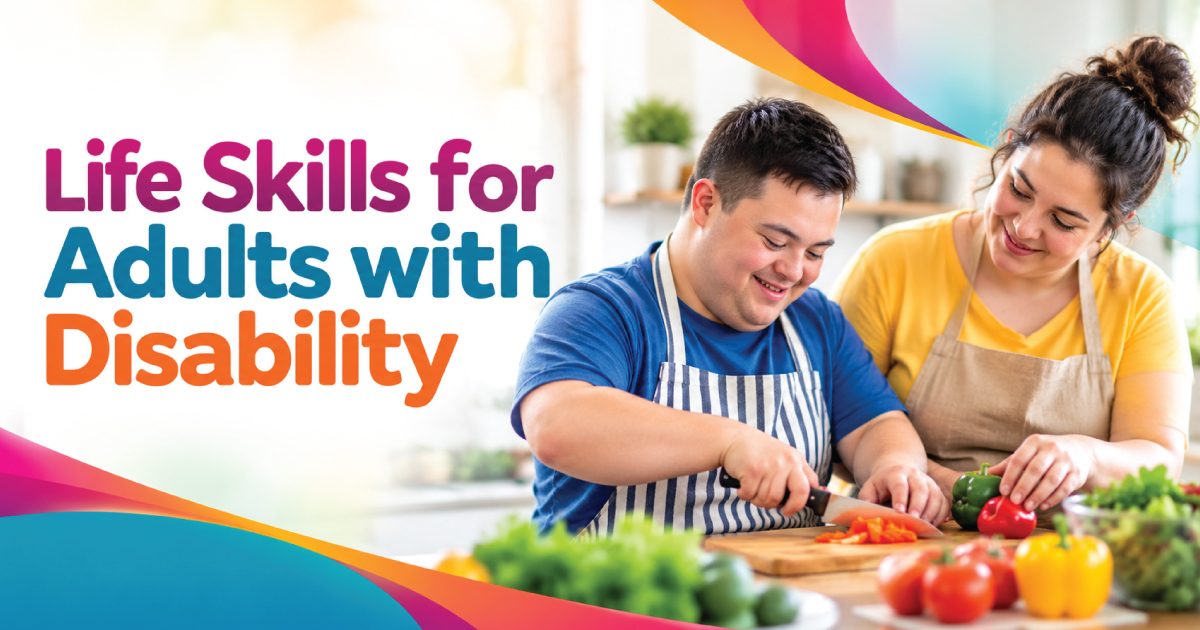
Life skills for adults with disability are the everyday abilities that let a person do more for themselves, with less help. They cover cooking, money, travel, personal care, routines and staying safe. The NDIS usually funds this kind of learning through Capacity Building, and good support turns “someone does it for me” into “I can do it myself”.
This guide covers real examples, which part of your NDIS plan pays, how to word a goal, and what a session looks like. Want hands-on help close to home? Urcare and Support Services delivers daily living and life skills support across Ipswich and Greater Springfield, one-on-one or in small groups.
What are life skills for adults with disability?
Life skills are the practical abilities adults use every day to look after themselves, their home and their money, and to get around their community. People also call them daily living skills, independent living skills or everyday life skills. The names differ. The idea stays the same.
The key word is learning. You build a life skill through practice, so over time you need less help with it. Some people aim to do a task fully on their own. Others aim to do part of it, or to need a prompt instead of hands-on help. Both count as progress, and the choice is yours.
What are some examples of everyday life skills?
Most life skills fit into eight areas. Here’s what each one covers, and what learning it can look like in real life.
| Skill area | Examples | What practice can look like |
|---|---|---|
| Cooking and food | Plan a simple meal, write a shopping list, use a microwave or stove safely | Cook one meal a week with a support worker beside you, then on your own |
| Money | Count change, use a debit card, keep a weekly budget, pay bills | Practise paying at the local shops, and set up bill reminders on your phone |
| Travel | Plan a trip, read a timetable, tap on and off, ask for help | Ride the same bus route together until you feel ready to go solo |
| Home | Laundry, cleaning routines, sorting mail | Make a simple checklist for wash day and tick it off together |
| Personal care and health | Hygiene routines, booking appointments, following a medication routine with prompts | Use picture cards or phone alarms to build a morning routine |
| Safety | Road safety, what to do in an emergency, when to call 000 | Practise crossing at the lights, and role-play an emergency call |
| Technology | Using a phone, email and apps, staying safe online | Learn to message a friend, then to spot a scam text |
| Social and community | Starting a conversation, joining a local group | Visit a community centre and try one activity |
Travel often opens the most doors, because it reaches work, study, friends and appointments all at once. Our travel and transport support includes step-by-step training on buses and trains, and our article on why accessible transport changes everything covers other ways to get around while your confidence grows.
How are daily living skills different from daily living support?
Daily living skills are about learning to do a task. Daily living support is about someone helping you do it. Picture two support workers. One cooks dinner for you. The other stands beside you while you cook, then steps back a little more each week.
The NDIS treats these differently. Help with everyday tasks usually comes from Core supports, and our guide to NDIS assistance with daily life explains what that covers. Learning new skills usually comes from Capacity Building.
Many people need both. You might get help with showering every morning and learn to cook on Thursdays. That mix is normal, and it shifts as your skills grow.
Does the NDIS fund life skills training for adults?
Yes. The NDIS can fund life skills training for adults when it links to your goals and the NDIA agrees it’s reasonable and necessary for your disability. Most of this funding sits in Capacity Building, mainly the Improved Daily Living category.
The NDIS describes Capacity Building as supports that “build your skills to do things for yourself and work towards your goals”. That line is the best test for any life skills request. Does the support teach, or does it do?
Which part of an NDIS plan pays for life skills?

The NDIS groups funding into 4 support budgets and 21 support categories, according to its guide to NDIS support budgets. Your plan only holds funding in the ones you need. Life skills funding usually sits in one of three places.
| Budget | Support category | What it can pay for | Can you move the money? |
|---|---|---|---|
| Capacity Building | Improved Daily Living | Assessments, training and therapies that build your living skills, such as occupational therapy | No. Capacity Building funding is stated |
| Capacity Building | Increased Social and Community Participation | Training to build social skills, make friends and increase your independence in the community | No. Stated |
| Core | Assistance with Daily Life | Support with daily tasks. The NDIS names building daily living skills as one goal this funding can serve | Yes, across Core categories, unless your plan marks it as stated |
Your plan shows which categories you have funding in. Social skills often draw on the participation category, and our guide to NDIS community participation covers that side in more depth.
What does capacity building for daily activities mean in the NDIS?
Capacity building for daily activities means NDIS funding for supports that teach you to manage everyday tasks yourself, rather than supports that do the tasks for you. Most of it sits in the Improved Daily Living category. The NDIS treats Capacity Building funding as stated, so you can’t move it between categories.
A quick heads-up. The NDIS currently shows a notice saying it’s updating its website to reflect new NDIS legislation, and some rules may change. Check your own plan, or ask your plan manager or support coordinator, before you book.
How do you set NDIS life skills goals?
A good goal says what you want to do, in your own words. The NDIA uses your goals to decide which supports fit, so clear goals make your planning meeting easier. The NDIS has a short guide on how to set goals.
Clear life skills goals sound like this:
- “I want to catch the bus to TAFE on my own.”
- “I want to cook dinner for my housemates twice a week.”
- “I want to manage my own grocery money.”
- “I want to get ready for work in the morning with only a checklist.”
Bring evidence to your meeting. Notes from your support worker, an occupational therapy report or a simple diary of what you find hard all help show why skills training matters for you.
What does a life skills session look like?
Every provider works a little differently, but most life skills support follows a pattern like this:
- Start with your goal. You and your support worker talk about what you want to learn and why.
- Break it into steps. “Catch the bus” becomes checking the timetable, walking to the stop, tapping on, knowing your stop and getting home.
- Practise in real places. Sessions happen at home, at the shops or at the bus stop, wherever the skill gets used.
- Step back slowly. Your worker moves from doing it with you, to watching, to being on call.
- Track progress. Workers note what you did on your own each week, so you and your family can see the change.
- Review your goals. Progress notes help at your next plan check-in or reassessment.
Step four does most of the work, so here’s how it tends to play out. This is a typical pattern, not an NDIS rule, and plenty of people move back a stage on a hard day.
| Stage | What your worker does | What you do |
|---|---|---|
| 1. Show me | Does the task while talking it through | Watch and ask questions |
| 2. Do it together | Works side by side, hands-on where needed | Share the task |
| 3. Prompt me | Stands back and gives a spoken or picture prompt | Do most of the task |
| 4. Check in | Stays nearby or on the phone | Do the whole task |
| 5. On my own | Reviews how it went at the next session | Do it independently |
At Urcare and Support Services, our support workers deliver life skills support one-on-one or in groups, at home or out in the community. Call 0449 630 680 to talk through your goals, or send a referral and our team will get in touch.
How much does life skills training cost?
The NDIS sets price limits for each support item in its pricing arrangements. The price changes with the time of day, the day of the week and whether the support is one-on-one or in a group. Your plan funding covers supports in your plan, so there’s usually nothing to pay out of pocket. For the 2026-27 hourly rates, read our guide to how much NDIS support costs.
FAQs about life skills for adults with disability
Is it too late to learn life skills as an adult?
No. Adults keep learning new skills at every age, and practice in real places makes a big difference. Plenty of adults learn to cook, budget or travel alone in their 30s, 40s and beyond. The best starting point is one small, clear goal that matters to you, practised regularly with the right support.
Is life skills training one-on-one or in a group?
Both options exist. One-on-one sessions suit skills tied to your own home, routine or travel route. Group sessions suit social skills and shared tasks like cooking, and they’re a good way to meet people. Many participants use a mix, and your goals and plan funding guide which option fits best.
Do I need a registered NDIS provider for life skills training?
It depends on how your plan is managed. NDIA-managed funding can only go to registered providers, while self-managed and plan-managed participants can usually choose unregistered providers too. You can check any provider on the NDIS Commission provider register. Urcare and Support Services holds registration for Development of Daily Living and Life Skills.
What if my NDIS plan has no Capacity Building funding?
Talk to your my NDIS contact or support coordinator about your goals. You can ask the NDIA to change your plan when your needs or goals have changed. Bring evidence that shows what you want to learn and why. You can also call the NDIA on 1800 800 110.
How long does it take to learn a life skill?
It varies a lot. A simple routine might take a few weeks of regular practice. A bigger skill, like travelling alone to a new place, can take months. Progress is rarely a straight line, so tracking small wins week by week helps everyone see how far you’ve come.
Ready to build new skills?
Every life skill starts with one goal and the right person beside you. Urcare and Support Services is a registered NDIS provider supporting adults across Ipswich and Greater Springfield. Call 0449 630 680, send a referral or contact our team to get started.