

Caring for a family member with disability is a big job. Rewarding, yes. Also tiring, especially without a proper break.
NDIS respite care exists for exactly that reason. It gives the participant time away from their usual care arrangements, and gives the family member or friend who supports them a chance to rest. This guide covers what the support actually is, who qualifies, what it pays for, and how to get it into a plan.
What Is NDIS Respite Care?
NDIS respite care is funding for a participant to spend time apart from the family or friends who usually support them, while still getting the help they need. The NDIS calls it short-term accommodation. It funds up to 28 days a year, for up to 14 days at a time, and its purpose is to sustain informal carers so they can keep going long term.
Quick note on the name, because it trips people up. The NDIA renamed short-term accommodation (STA) to “short term respite” (STR) in October 2025, then changed it back after feedback that the new wording put too much focus on carers rather than participants. The official NDIS short-term accommodation page uses STA today. Older plans, service agreements and provider websites still say STR or “respite”. Same support, three names.
During a stay, a participant might:
- Stay somewhere comfortable with support workers close by
- Try new activities, like art, sport or day trips
- Build confidence spending time away from home
Their usual carer gets a real break at the same time. That break is the point, and the NDIA says so directly in its guideline.
Who Is Respite Care For?
Short-term accommodation is for participants who rely heavily on unpaid support from family or friends. The NDIA looks at two things first. You need to live with your primary informal supports, or get daily drop-in support from them, and you need to receive more than 6 hours of disability-related support from them each day, on a long-term basis.
Meeting those two tests is the starting point, not the finish line. At least one of these also needs to apply:
- You receive high-intensity supports, such as complex bowel care, enteral feeding or ventilator management
- You need intensive or complex positive behaviour support
- You live somewhere with limited access to alternative in-home supports
- Your carer’s own health, age or wellbeing puts their caring role at risk
- Your carer has other significant caring responsibilities, such as young children or another family member with disability
The NDIA also names situations where it won’t fund this support. Living alone without drop-in support rules you out, because you already get time apart. Receiving more than 18 hours of paid support in your home each day rules you out too, as does living in a supported independent living arrangement. Worth checking before you ask.
Children under 18 face a higher bar. The NDIA funds short-term accommodation for children only in exceptional situations, and it looks at the whole family’s circumstances, not just the child’s support needs. Where a child is at real risk of not being able to stay in the family home, the NDIA can fund beyond 28 days, though it rarely goes past 60 days a year.
Why Does Respite Care Matter?
Caring for someone day after day, with no break, wears people down. Respite isn’t a luxury. It keeps the whole arrangement working.
The participant gets a change of routine, a shot at new skills, and often new friendships. The carer gets rest, which is what lets them keep showing up with patience rather than running on empty. Both sides matter, and the NDIA funds the support precisely because losing an informal carer costs the scheme far more than a few nights away.
What Can You Expect During a Respite Stay?
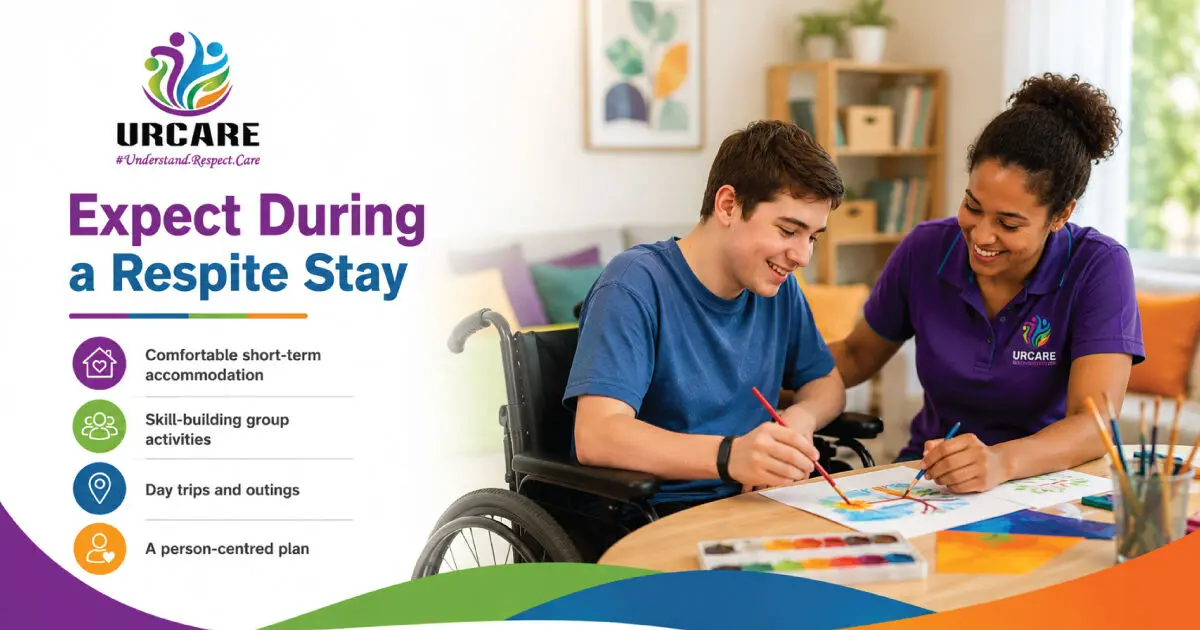
A good stay feels comfortable and social, not clinical. At URCARE Support, our respite service includes:
- Comfortable short-term accommodation with support close by
- Skill-building group activities, including art therapy and group fitness
- Day trips and outings into the community
- A person-centred plan built around what the participant actually enjoys
Personal care usually forms part of the stay. Help with showering, meals, medication and daily routines carries on as normal, so nothing slips while the usual carer takes a break. Our team supports participants across Augustine Heights, Springfield, Ipswich and greater Brisbane, and we’re happy to walk families through what a first stay looks like before anyone commits.
Respite comes in several forms beyond an overnight stay, including in-home support, centre-based days and community outings. Our guide to the types of respite care walks through each one and helps you match the format to your situation.
One point on urgent situations, since people often look in the wrong place. The NDIS doesn’t fund emergency respite as a separate category. Urgent, unplanned cover after a carer falls ill or has an accident generally comes through Carer Gateway, the Australian Government’s national carer service, on 1800 422 737. Keep that number somewhere findable before you need it.
What Does NDIS Respite Funding Cover?
Short-term accommodation funding sits in your Core budget as flexible funding. It pays for the accommodation itself, your personal care, and the support you need to take part in community, cultural or social activities.
It doesn’t pay for everything, and this catches families out constantly.
| Funded | Not funded |
|---|---|
| Standard accommodation (hotel, cabin, cottage, hostel, respite house) | Holidays, cruises, tour packages, airfares |
| Personal care and everyday support during the stay | Meals, groceries and food |
| Support to take part in activities | The activities themselves, entry fees, equipment hire |
| A support worker’s accommodation where you need overnight support | Transport to the accommodation, unless you have separate transport funding |
Participants pay for their own meals and their own activity costs. A provider might offer three meals a day as an add-on, and that comes out of your own money, not your plan. The NDIA treats food as a day-to-day living cost everyone pays.
One more change worth knowing. From 1 July 2026, providers claim short-term accommodation as itemised line items rather than one bundled daily rate. Ask any provider you’re considering how they now itemise a stay, so there are no surprises on the invoice.
How Do You Access Respite Care?
Getting started is simpler than most families expect.
- Check your NDIS plan. Short-term accommodation needs to sit in your funded supports, usually inside your Core budget.
- Talk to your planner or support coordinator. Not in the plan yet? They can help you ask, and gather the evidence the NDIA wants. Our guide to NDIS Support Coordination explains how a coordinator builds that case.
- Choose a provider you trust. Look for a team that understands the participant’s needs and makes the whole family feel comfortable.
- Plan the details together. Work out how often, how long, and what level of support each stay needs.
Not sure respite is the right fit? Our guide to NDIS Assistance with Daily Life covers the wider set of everyday supports, and often points to a better starting point.
How Much Respite Can You Get?
The NDIA generally funds up to 28 days of short-term accommodation per year, and up to 14 days at a time. You choose how to use it. A single two-week block works. So does one weekend a month, which is how most families we support actually use it.
The exact amount depends on what your plan approves, and the NDIA sets it by looking at how many hours of informal and paid support you already receive. Where support needs are unusually high, the agency can fund more in exceptional circumstances. The full rules sit in the NDIS short-term accommodation guideline, updated 27 July 2026.
Frequently Asked Questions
Is short-term accommodation the same as respite?
Yes. Short-term accommodation (STA) is the NDIS name for what most families call respite. The NDIA briefly renamed it “short term respite” (STR) in October 2025, then reverted to short-term accommodation. Older plans and provider sites still use both terms for the same support.
How many days of respite does the NDIS fund per year?
The NDIS generally funds up to 28 days of short-term accommodation per year, for up to 14 days at a time. You can spread it however suits you, such as one weekend a month. In exceptional circumstances, including some situations involving children, the NDIA can fund more.
Does NDIS respite pay for meals and activities?
No. Your funding covers the accommodation, your personal care and the support you need to join in activities. It doesn’t cover the food itself or the cost of the activities, entry fees or equipment. The NDIA treats those as everyday living costs that everyone pays.
Can children access respite care?
Only in exceptional situations. The NDIA looks at whether the child needs more than 6 hours of daily disability-related care, well beyond what’s typical for their age, and at the whole family’s circumstances. Where a child risks losing their place in the family home, funding can extend beyond 28 days.
What is emergency respite care and who provides it?
Emergency respite covers urgent, unplanned situations, such as a carer falling ill or being injured. The NDIS doesn’t fund it as a separate category. Carer Gateway arranges emergency respite for carers across Australia and you can reach them on 1800 422 737 at any time.
Does respite replace paid support workers?
No. Short-term accommodation exists to sustain unpaid carers, not to replace funded supports. The NDIA won’t fund it where you already receive more than 18 hours of paid support in your home each day, or where you live in a supported independent living arrangement.
Thinking About Respite?
Talk it through with someone who arranges these stays every week. Get in touch with our team or send a referral, and we’ll walk you through what respite could look like for your situation. We provide respite care across Brisbane and Ipswich, alongside our full range of NDIS services.